

Legal work has always depended on documentation. Every deposition, client meeting, witness interview, and courtroom exchange creates information that can shape a case. For years, firms relied on manual notes or outsourced legal transcription services to turn recordings into written records. That process worked, but it was slow and difficult to scale.
In 2026, legal conversations will happen everywhere. Remote depositions, virtual hearings, and digital case collaboration have dramatically increased the volume of recorded discussions. Law firms now need transcripts faster, searchable instantly, and organized intelligently. That is why AI transcription services are becoming central to modern legal workflows.
Legal professionals manage a massive amount of recorded audio every day. Depositions can run for several hours, and that is only one part of the picture. Add witness interviews, court proceedings, internal strategy discussions, and client consultations, and the volume quickly multiplies.
Within those recordings are critical admissions, timeline clarifications, factual inconsistencies, and strategic details that can shape the direction of a case. Missing even one key statement can create setbacks.
Traditional Law transcription services continue to support this documentation process, but firms often encounter practical challenges. Long turnaround times, per-hour transcription costs, manual formatting requirements, and limited search functionality can slow progress. When attorneys must wait days for transcripts or manually scan lengthy documents, case preparation becomes less efficient and momentum is lost.
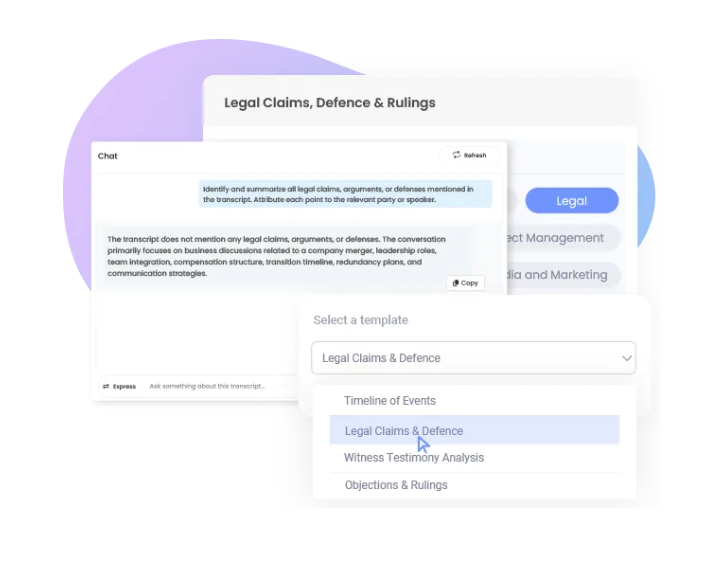
AI transcription services do more than convert audio into text. Once conversations are transcribed, they become structured data that supports legal document analysis.
Instead of replaying recordings repeatedly, attorneys can work directly from organized transcripts that surface what matters.
AI-powered systems can:
Because transcripts are searchable and structured, legal document analysis becomes faster and more precise.
From faster transcripts to structured legal document analysis, AI transcription services are reshaping how legal teams work.
Traditional legal transcription services may take hours or days.
AI transcription services generate transcripts within minutes.
This allows attorneys to:
Depositions often exceed hundreds of pages. Manually reviewing printed transcripts is time-consuming.
AI-powered transcripts allow attorneys to:
Centralized transcript storage improves collaboration.
Multiple attorneys can:
Accurate Law transcription services support case strategy by helping attorneys:
| Feature | AI Transcription Services | Traditional Legal Transcription Services |
|---|---|---|
| Turnaround Time | Transcripts generated within minutes | Transcripts delivered in days |
| Cost Efficiency | Lower cost at scale with predictable pricing | Per-hour costs that increase with volume |
| Scalability | Handles large volumes instantly without added staff | Requires more administrative support as volume grows |
| Analytical Capability | Enables legal document analysis, summaries, keyword search, and structured organization | Provides text output only, with limited analytical support |
| Continuous Access | Secure, searchable transcript archive available anytime | Static files stored separately with limited search functionality |
Confidentiality is essential in legal practice. Any technology adopted must protect client information.
Modern AI transcription services typically include:
Transcription is now only the first step.
Once recordings are converted into structured text, legal document analysis tools help teams:
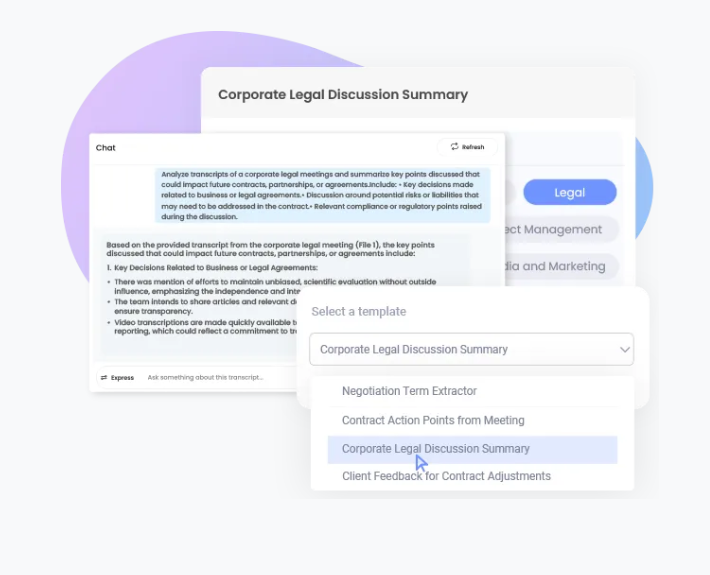
Platforms like DictaAI combine AI transcription services with structured organization tools designed for legal teams.
With DictaAI, firms can:
Also Read: 6 Must-Have Tools Every Attorney Needs for Maximum Legal Efficiency and Success
Legal workflows will continue to become more digital and data-driven.
Future Law transcription services powered by AI are expected to:
Legal documentation is expanding, not shrinking.
AI transcription services are transforming how firms capture, search, and analyze recorded conversations. While traditional legal transcription services remain important, AI now adds speed, scalability, and structured legal document analysis to the process.
In 2026, transcription is no longer just about producing text. It is about turning spoken legal discussions into searchable, strategic knowledge that strengthens every case.




Comments
Glynnis Campbell
This is a test comment!